
Table of Contents
- How Are Brass Statues Made?
- Why Brass Is Used for Sculptures
- The Traditional Lost Wax Casting Method
- Finishing and Polishing Process
- Why Handmade Brass Statues Are Valuable
- Frequently Asked Questions
How Are Brass Statues Made?
Many art collectors, homeowners, and spiritual devotees often ask, how are brass statues made. The answer lies in a fascinating process that combines ancient techniques with exceptional craftsmanship. For centuries, artisans have transformed brass into beautiful sculptures, religious idols, and decorative masterpieces.
Understanding how are brass statues made helps people appreciate the time, skill, and dedication that goes into creating every handmade piece.
Why Is Brass Used for Statues?
Before learning how are brass statues made, it is important to understand why brass is such a popular material.
Brass is an alloy primarily made from copper and zinc. It offers several advantages:
- Excellent durability
- Resistance to corrosion
- Attractive golden appearance
- Easy to shape and engrave
- Long-lasting beauty
Because of these qualities, brass has become one of the most preferred metals for creating decorative and religious sculptures.
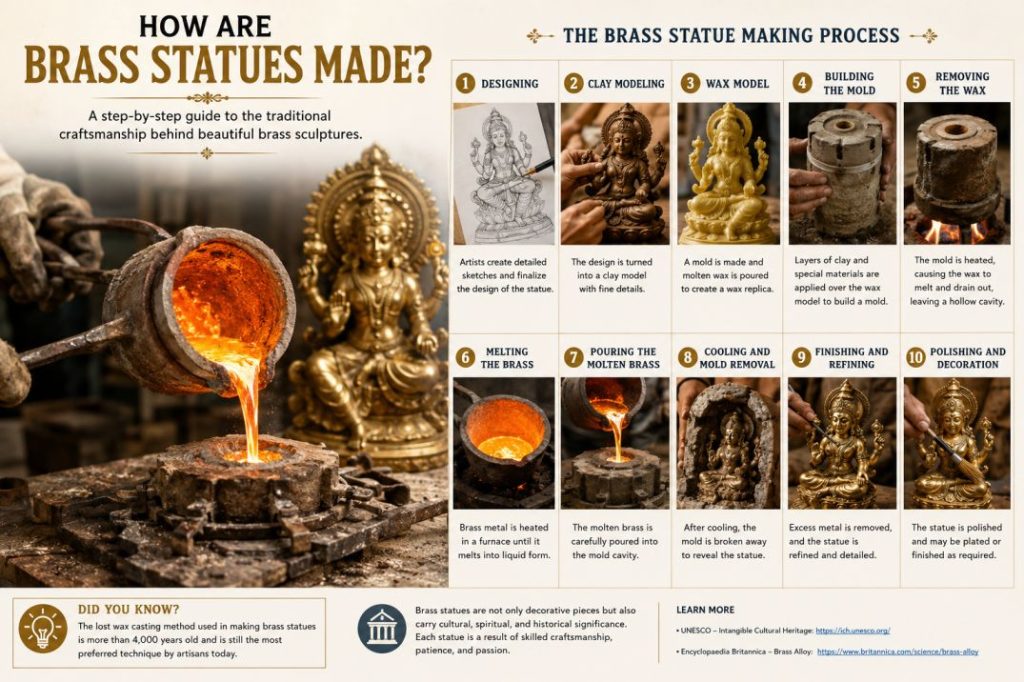
How Are Brass Statues Made Step by Step?
The process of how are brass statues made involves multiple stages, each requiring precision and artistic expertise.
Step 1: Designing the Sculpture
Every brass statue begins with an idea. Artists create sketches and reference drawings to determine the final appearance of the sculpture.
The design includes:
- Size and dimensions
- Facial features
- Clothing and ornaments
- Decorative patterns
A carefully planned design ensures that the finished statue is balanced and visually appealing.
Step 2: Creating a Clay Model
The next stage in how are brass statues made is sculpting a clay model.
Skilled artisans shape clay by hand to create a detailed prototype. Every feature, from facial expressions to jewelry, is carefully crafted during this stage.
Depending on the complexity, creating the clay model can take several days or even weeks.
Step 3: Making the Wax Replica
Traditional brass statues are often produced using the famous lost wax casting method.
A mold is made from the clay sculpture, and molten wax is poured into it to create an exact wax replica. This replica preserves every intricate detail of the original model.
Step 4: Building the Outer Mold
The wax model is then covered with several layers of clay and other heat-resistant materials.
Small channels are created so that:
- Wax can escape.
- Molten brass can enter the mold.
After drying, the mold becomes strong enough to withstand extremely high temperatures.
Step 5: Melting the Wax
The mold is heated inside a furnace.
As the temperature increases, the wax melts and drains out, leaving behind a hollow cavity.
This process gives the technique its name: the lost wax casting process.
Step 6: Melting the Brass
One of the most important stages in how are brass statues made is preparing the metal.
Brass pieces are placed inside a furnace and heated until they become molten. The temperature must be carefully controlled to ensure a smooth and successful casting process.
Step 7: Pouring the Molten Metal
The molten brass is carefully poured into the mold through the channels.
The liquid metal fills every section of the cavity and captures even the smallest decorative details.
This stage requires tremendous experience because mistakes can cause defects or imperfections.
Step 8: Cooling and Removing the Mold
After the mold is filled, it is left to cool naturally.
Once the metal solidifies, the outer mold is broken apart, revealing the newly formed brass statue.
At this stage, the sculpture still appears rough and unfinished.
Step 9: Finishing and Refining
Another important part of how are brass statues made involves extensive finishing work.
Artisans:
- Remove excess metal
- Smooth rough edges
- Carve fine details
- Repair imperfections
This process can take several additional days depending on the complexity of the sculpture.
Step 10: Polishing and Decorative Finishes
The final stage of how are brass statues made is polishing and decoration.
Depending on customer preferences, the statue may receive:
- High-gloss polishing
- Antique finish
- Gold plating
- Silver plating
- Protective coatings
The result is a beautiful and durable work of art that can last for generations.
Why Handmade Brass Statues Are Valuable
Understanding how are brass statues made also explains why handmade pieces are highly valued.
Each sculpture is unique because artisans invest countless hours into:
- Designing
- Sculpting
- Casting
- Finishing
- Polishing
Unlike machine-made products, handmade brass statues carry artistic and cultural significance.
How Long Does It Take to Make a Brass Statue?
The answer depends on:
- Size of the sculpture
- Amount of detailing
- Type of finish required
Small statues may take only a few days, while large and intricate sculptures can require several weeks or even months to complete.
Also Check : Our Products
How Are Brass Statues Made and Preserved for Generations?
Brass statues are known for their exceptional durability. Proper maintenance helps preserve their beauty.
To care for brass sculptures:
- Dust regularly.
- Avoid harsh chemicals.
- Keep away from excessive moisture.
- Polish gently with a soft cloth.
With proper care, brass statues can last for generations and even become treasured family heirlooms.
Final Thoughts on How Are Brass Statues Made
The process of how are brass statues made is a remarkable blend of traditional craftsmanship and artistic skill. From designing and clay modeling to lost wax casting and final polishing, every stage requires patience and expertise.
The next time you admire a brass sculpture, you will know that it represents centuries of tradition and countless hours of dedicated craftsmanship. Whether used as religious idols, decorative pieces, or collectible antiques, handmade brass statues continue to be cherished around the world.