
Introduction
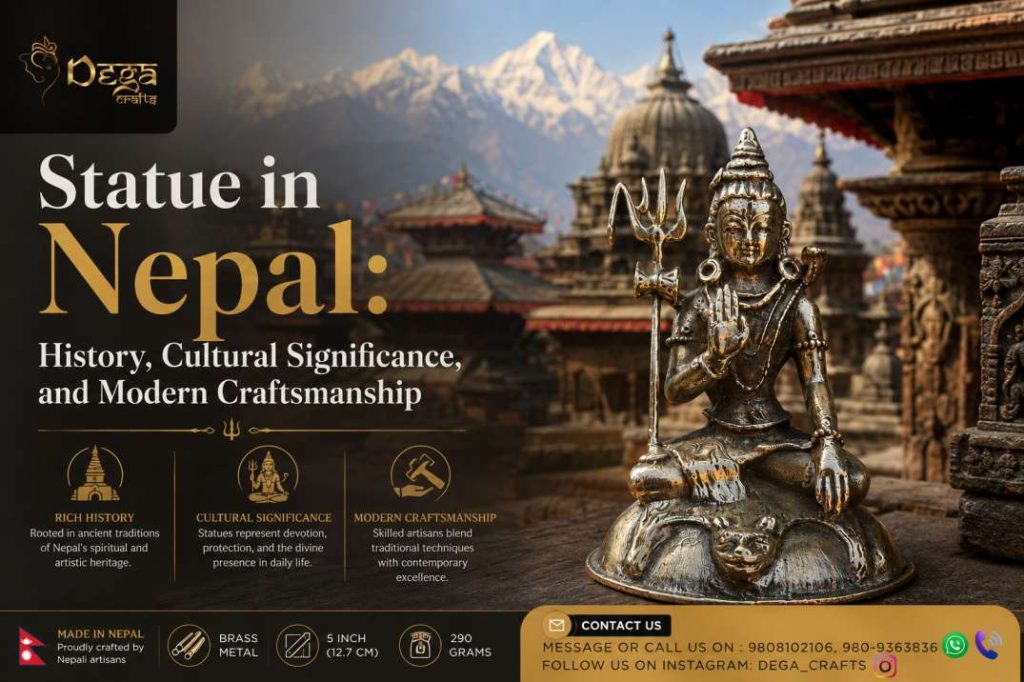
A statue is more than a decorative object. Throughout history, statues have served as symbols of faith, power, culture, and artistic achievement. In Nepal, the tradition of creating a statue dates back centuries and continues to play an important role in religious, cultural, and artistic life.
From sacred temples and monasteries to homes and public spaces, a statue can be found in almost every part of Nepalese society. Whether crafted from brass, bronze, stone, or wood, each statue reflects the skills of artisans and the values of the community it represents.
This article explores the history, importance, craftsmanship, and modern relevance of the statue in Nepal while highlighting why Nepalese artisans are respected around the world for their exceptional work.
Table of Contents
- What Is a Statue?
- The History of Statues in Nepal
- Cultural Importance of a Statue
- Religious Significance of Statues
- Materials Used to Create a Statue
- Traditional Statue-Making Techniques
- Popular Types of Statues in Nepal
- Why Handmade Statues Are Valuable
- Choosing the Right Statue
- Caring for a Statue
- Modern Demand for Nepalese Statues
- Conclusion
- Frequently Asked Questions
What Is a Statue?
A statue is a three-dimensional representation of a person, deity, animal, or symbolic figure. Unlike paintings or drawings, a statue occupies physical space and can be viewed from different angles.
Statues are created for various purposes, including:
- Religious worship
- Cultural preservation
- Decoration
- Memorials
- Artistic expression
In Nepal, a statue often carries spiritual meaning and serves as a connection between tradition and daily life.
The History of Statues in Nepal
The history of the statue in Nepal stretches back thousands of years. Ancient kingdoms supported the development of sculpture and metalworking, leading to remarkable artistic traditions.
During the Licchavi and Malla periods, artisans produced intricate statues depicting Hindu and Buddhist deities. Many of these historical works remain preserved in temples, monasteries, and museums.
The Kathmandu Valley became particularly famous for its skilled craftsmen, whose techniques have been passed down through generations.
Today, Nepal continues to be recognized internationally for producing high-quality religious and cultural statues.
Cultural Importance of a Statue
A statue plays a significant role in preserving cultural identity. Across Nepal, statues are found in public squares, temples, monasteries, and homes.
They help communities:
- Preserve historical memories
- Celebrate cultural heritage
- Honor important figures
- Maintain artistic traditions
- Strengthen spiritual connections
Many festivals and ceremonies also involve statues that represent religious or cultural values.
Religious Significance of Statues
Religion is one of the primary reasons for the creation of a statue. In Nepal, both Hinduism and Buddhism have rich traditions of sacred sculpture.
A religious statue may represent:
- Buddha
- Shiva
- Ganesh
- Krishna
- Durga
- Saraswati
- Lakshmi
- Avalokiteshvara
These statues are often used during prayer, meditation, rituals, and festivals.
For many devotees, a statue serves as a focal point for spiritual practice and devotion.
Materials Used to Create a Statue
Different materials influence the appearance, durability, and value of a statue.
Brass
Brass is among the most popular materials for creating a statue in Nepal. It offers durability, beauty, and excellent detail.
Bronze
Bronze is highly valued for its strength and historical significance.
Stone
Stone statues have been used for centuries in temples and outdoor spaces.
Wood
Wooden statues showcase traditional craftsmanship and artistic creativity.
Copper
Copper provides a distinctive appearance and is commonly used in religious sculpture.
Each material contributes unique qualities to the finished statue.
Traditional Statue-Making Techniques
Creating a statue requires patience, skill, and years of experience.
Design and Planning
Artisans begin by sketching the design and determining proportions.
Wax Modeling
Many metal statues use the lost-wax casting technique, one of the oldest sculpture methods in the world.
Mold Creation
A mold is prepared around the wax model to capture every detail.
Metal Casting
Molten metal is poured into the mold to form the statue.
Finishing and Polishing
The statue is refined, polished, engraved, and decorated.
Quality Inspection
Every statue undergoes inspection to ensure craftsmanship and accuracy.
These traditional techniques have helped Nepal maintain its reputation as a center of exceptional sculpture.
Popular Types of Statues in Nepal
Buddha Statue
A Buddha statue symbolizes peace, wisdom, and enlightenment.
Ganesh Statue
A Ganesh statue is associated with success, prosperity, and new beginnings.
Shiva Statue
A Shiva statue represents transformation and spiritual power.
Krishna Statue
A Krishna statue symbolizes love, compassion, and devotion.
Durga Statue
A Durga statue reflects courage, protection, and divine strength.
Animal Statues
Animal figures such as lions, elephants, and mythical creatures are also popular.
Why Handmade Statues Are Valuable
A handmade statue offers advantages that mass-produced products cannot match.
Unique Craftsmanship
Every statue possesses individual artistic details.
Cultural Authenticity
Traditional methods preserve Nepal’s artistic heritage.
Superior Quality
Experienced artisans ensure precise finishing and durability.
Long-Term Value
A well-crafted statue can last for generations.
Spiritual Significance
Handmade religious statues often hold deeper meaning for worshippers and collectors.
Choosing the Right Statue
When selecting a statue, consider the following factors:
Purpose
Determine whether the statue is intended for worship, decoration, or gifting.
Material
Choose a material that matches your preferences and environment.
Size
Ensure the statue fits the intended location.
Craftsmanship
Examine detailing, symmetry, and finishing quality.
Authenticity
Purchase from trusted artisans and established manufacturers.
Making an informed choice ensures long-term satisfaction.
Caring for a Statue
Proper maintenance helps preserve the beauty of a statue.
Regular Cleaning
Dust the statue gently using a soft cloth.
Avoid Harsh Chemicals
Strong cleaning agents may damage the finish.
Protect from Moisture
Store statues in dry conditions when possible.
Handle Carefully
Avoid dropping or striking delicate sections.
Periodic Inspection
Check for signs of wear and address issues promptly.
Good care can significantly extend the lifespan of a statue.
Modern Demand for Nepalese Statues
Global appreciation for Nepalese craftsmanship continues to grow. Collectors, spiritual practitioners, interior designers, and institutions seek authentic Nepalese statues for their beauty and cultural value.
Several factors contribute to this demand:
- Growing interest in Buddhist art
- Increased appreciation of handmade products
- Cultural tourism
- International exports
- Interior decoration trends
As a result, Nepalese artisans play an important role in preserving traditional skills while serving modern markets.
Conclusion
A statue represents much more than artistic expression. It embodies history, culture, spirituality, and craftsmanship. Nepal’s rich tradition of statue-making continues to inspire people around the world through exceptional artistry and cultural authenticity.
Whether used for worship, decoration, collection, or gifting, a well-crafted statue carries lasting significance and beauty. By supporting skilled artisans and preserving traditional methods, future generations can continue to appreciate the remarkable heritage represented by every statue.
Frequently Asked Questions
What is a statue?
A statue is a three-dimensional sculpture representing a person, deity, animal, or symbolic figure.
Why are statues important in Nepal?
Statues preserve cultural heritage, support religious practices, and showcase traditional craftsmanship.
Which material is best for a statue?
Brass and bronze are popular choices due to their durability and detailed appearance.
How long does a handmade statue last?
With proper care, a handmade statue can last for many decades or even centuries.
Why are Nepalese statues famous?
Nepalese statues are respected worldwide for their intricate craftsmanship, cultural authenticity, and artistic quality.